There's a moment every new business owner faces: you've got a great product or service, a half-built website, and someone asks, "Have you got a card?" You reach into your pocket and find nothing. It's a small thing, but it stings.
Print materials aren't old-fashioned — they're foundational. In a world of fleeting digital ads and overflowing inboxes, a well-designed physical item cuts through in a way that a social media post simply cannot. People keep things they can touch.
So if you're building a business or refreshing your marketing, here's a practical look at what are the 5 examples of print materials that genuinely earn their place — and how to make the most of each one.
1. Business Cards
Yes, they're still relevant. No, they haven't been replaced by QR codes and LinkedIn.
A business card is often your first physical impression. It signals that you're prepared, professional, and worth remembering. Done well, it's a tiny piece of brand communication that fits in someone's wallet.
What makes a great business card:
- Your name, job title, phone number, email, and website — nothing more than necessary
- A clean design that reflects your brand colours and fonts
- A finish that matches your brand personality (soft-touch matte for a premium feel, gloss for bold and bright, spot UV for something tactile and distinctive)
Don't cram everything on. White space is your friend. And please — use both sides. The back is prime real estate that most people waste.
If you attend networking events, trade shows, or even just client meetings, you need business cards. Order more than you think you'll need.
2. Flyers and Leaflets
Flyers are the workhorses of small business print. They're affordable, quick to produce, and remarkably versatile — whether you're promoting a sale, announcing a new service, or handing something out at a local event.
The key difference between a flyer that works and one that goes straight in the bin? Clarity of purpose. Every flyer should have one primary message and one call to action. Don't try to say everything at once.
When flyers work well:
- Door-to-door drops in a local area
- Point-of-sale handouts
- Event promotions
- Inside packaging as a thank-you or upsell
A few things to get right:
- Use a headline that speaks directly to your customer's problem or desire
- Keep body copy short — bullet points over paragraphs
- Include a clear next step: visit this URL, call this number, use this code
A5 is a popular size because it's big enough to be noticed but small enough to feel manageable. If you're posting through doors, A5 or DL (a third of A4) will save you on print and postage costs without sacrificing impact.
3. Roller Banners and Display Stands
If you exhibit at trade shows, attend markets, or present at conferences, a roller banner is non-negotiable. It's the quickest way to claim your space and make your brand visible from across a room.
A good roller banner does one job: it stops people in their tracks and tells them, in three seconds or less, what you do and why they should care.
Tips for an effective roller banner:
- Lead with a strong visual or bold headline — not your logo
- Use your logo, but place it lower down where people will naturally look after they've been drawn in
- Stick to three or four lines of text maximum
- Use high-resolution images (at least 300dpi at print size) to avoid blurry output
Roller banners are reusable, lightweight, and easy to transport in their carry case. They're one of the better investments for any business that attends events regularly.
For a more permanent display — a reception area, a shop floor, an exhibition stand — consider a pull-up banner or a large format print mounted on foam board or aluminium. These give a more polished, fixed look.
4. Brochures and Catalogues
When someone is seriously considering buying from you — whether that's a product, a service, or a package — a brochure does something a website can't. It sits on a desk. It gets passed around an office. It gets picked up again three days later.
A well-produced brochure builds trust. It says: we've invested in explaining who we are and what we offer. That matters, particularly in B2B sales or higher-value consumer purchases.
What to include in a business brochure:
- A clear overview of your offer — what you do, who it's for, and why it's different
- Testimonials or case studies that build credibility
- Quality imagery that reflects your brand
- A strong call to action on the back page
You don't need a 20-page catalogue to make an impact. A simple 8-page A5 brochure, well-designed and well-written, can be more effective than something three times the size that nobody reads all the way through.
Choose your paper stock carefully. A heavier stock (130gsm or above for text pages) feels more premium in hand and reflects better on your brand.
5. Stationery: Letterheads and Compliment Slips
It might feel like business stationery belongs to a previous era, but branded letterheads and compliment slips still carry weight — particularly in professional services, legal, finance, construction, and any sector where correspondence matters.
Sending a proposal on a branded letterhead tells the recipient you're serious. Popping a handwritten compliment slip into a parcel adds a human touch that customers remember and often mention in reviews.
Where branded stationery earns its keep:
- Formal quotes and proposals sent by post
- Packing inserts with e-commerce orders
- Accompanying gifts or samples
- Thank-you notes to clients after a project
You don't need to order thousands at a time. Print on demand means you can order small quantities and update your stationery whenever your details change — no more crossing out old phone numbers with a biro.
Getting the Most From Your Print Materials
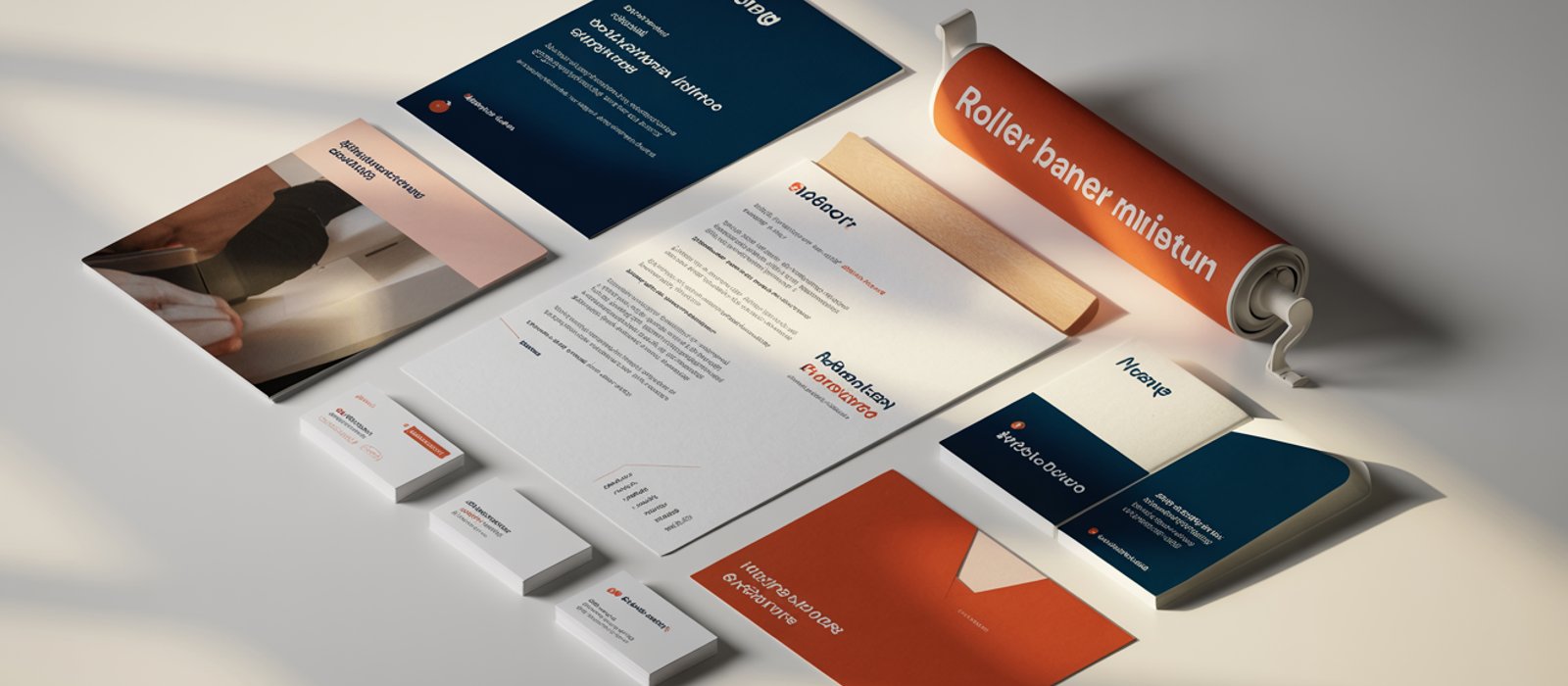
The five print materials covered here — business cards, flyers, roller banners, brochures, and stationery — represent a practical toolkit for the vast majority of small businesses. You don't need all five from day one, but knowing what each one does helps you invest in the right things at the right time.
A few principles apply across all of them:
- Consistency matters. Use the same fonts, colours, and tone of voice across everything. Inconsistent print makes even a good business look disorganised.
- Quality reflects on you. Thin paper, blurry images, and cheap finishes send a message you probably don't want to send.
- Design before you print. It's always cheaper to get the design right first than to reprint.
If you're ready to get any of these sorted, Designs on Print offers custom printing on all of the above, with no jargon and no minimum order headaches. Have a browse, or get in touch if you're not sure where to start.