
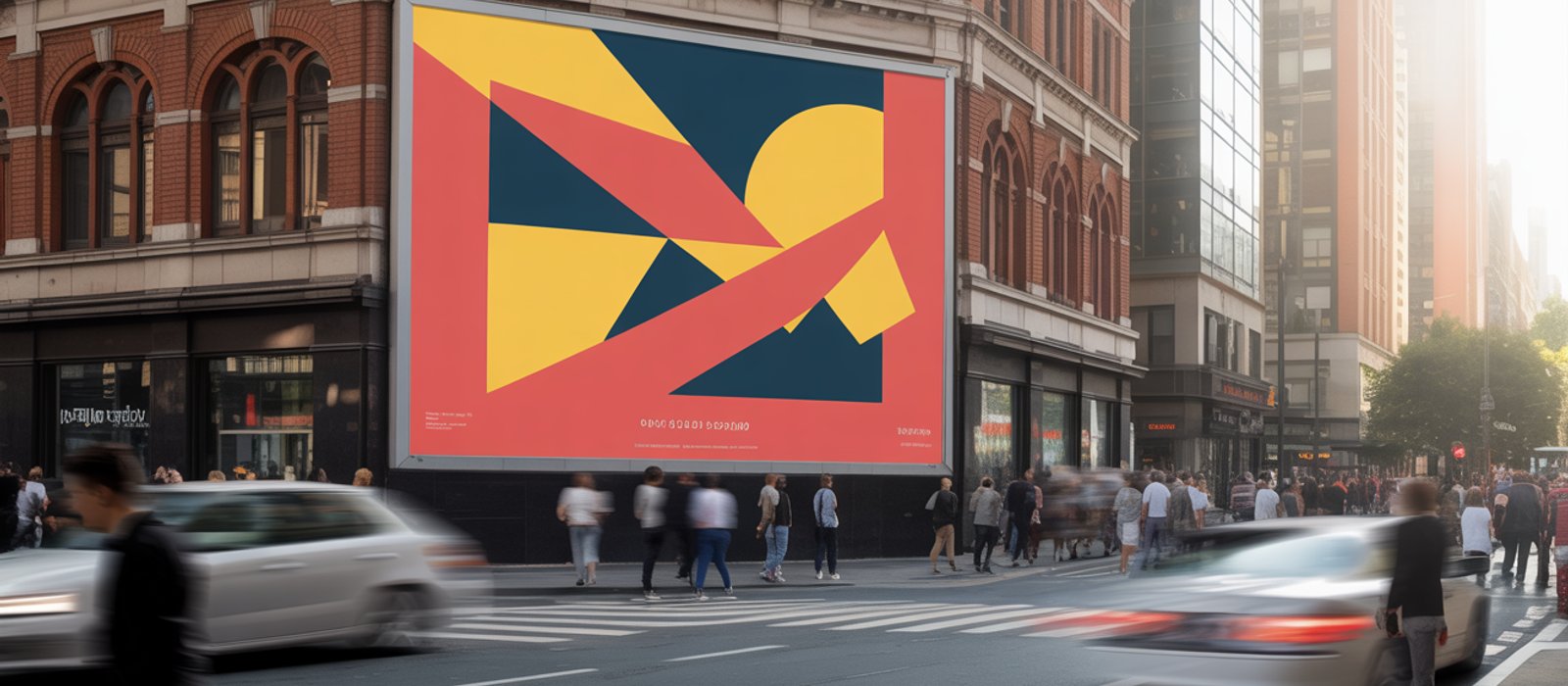
There's something undeniably powerful about a well-placed billboard poster. Whether it's lining the route into a town centre, filling a hoarding at a major event, or dominating the wall of a busy venue, billboard posters stop people in their tracks in a way that digital advertising simply can't replicate.
But if you've never ordered billboard posters before, the process can feel a little daunting. What size do you need? What resolution should your artwork be? What material works best outdoors? These are all fair questions — and getting the answers right before you send your files to print will save you time, money, and a fair amount of frustration.
This guide covers everything you need to know, from standard UK billboard sizes to artwork tips that will make your design look sharp from 10 metres away.
Understanding Standard Billboard Poster Sizes
Billboard posters come in a range of standardised sizes, and knowing which one you need before you start designing will make everything else much easier.
In the UK, the most common billboard sizes are based on the sheet system, which dates back to the days of hand-pasted paper posters. Here's a quick breakdown of the sizes you're most likely to encounter:
- 4-sheet (1016mm × 1524mm) — Often found in bus shelters and smaller outdoor sites. A solid choice for high foot traffic areas.
- 6-sheet (1200mm × 1800mm) — One of the most widely used formats for outdoor advertising, commonly seen at roadside sites and retail parks.
- 48-sheet (3048mm × 6096mm) — The classic large roadside billboard. High visibility, high impact.
- 96-sheet (3048mm × 12192mm) — Sometimes called a "double 48", these are the enormous billboards you see on major roads and motorways.
If you're ordering billboard posters for an event, an exhibition, or a hoarding rather than a standard roadside site, you may need a custom size entirely. That's absolutely fine — just make sure you know the exact dimensions of the space you're filling before you brief your printer.
Getting Your Artwork Right: Resolution, Bleeds, and Colour
This is where a lot of first-time billboard poster orders go wrong. Because billboard posters are viewed from a distance, the rules around resolution are quite different from what you'd expect for a business card or flyer.
Resolution and viewing distance
For large format printing, you don't need the 300 DPI (dots per inch) that's standard for small print. Billboard posters are typically printed at much lower resolutions — often between 10 and 72 DPI — because they're designed to be viewed from several metres away. The further the viewing distance, the lower the required resolution.
As a rough guide: a 6-sheet poster viewed from 3–5 metres needs artwork at around 100–150 DPI at actual size. A 48-sheet roadside billboard viewed from 15+ metres can be supplied at as low as 10–15 DPI at actual size. Your printer should be able to give you exact specifications when you place your order.
Working at a reduced scale
Supplying artwork at 1:1 (actual size) for a 48-sheet billboard would create an enormous file that's difficult to handle. Most printers ask for files supplied at a set scale — typically 1:10 — which means your artwork document would be 304.8mm × 609.6mm for a 48-sheet. Always confirm the scale and resolution requirements with your printer before you start building your file.
Bleed and safe areas
Add a bleed of at least 5mm (at scale) around the edges of your artwork. Keep any text, logos, or key visual elements well within the safe area — at least 10mm from the trim edge. Given how large these posters are in real life, even small misalignments during installation can cut off important details if you haven't left enough margin.
Colour mode
Supply your artwork in CMYK rather than RGB. RGB is for screens; CMYK is for print. If you design in RGB and don't convert before sending, your colours may shift noticeably during the printing process — and on a billboard, that's very noticeable indeed.
Choosing the Right Material for Your Billboard Poster
The material you choose will depend on where your billboard poster is going and how long it needs to last.
PVC banner material is the most common choice for outdoor billboard posters. It's durable, weather-resistant, and holds colour well. For temporary campaigns or events, a standard 440gsm or 510gsm PVC banner is usually sufficient.
Blockout PVC is worth considering if your poster is going to be backlit or if you need to prevent light bleeding through from behind. It's slightly heavier and completely opaque.
Polypropylene and paper substrates are used for shorter-term indoor billboard posters — think exhibition hoardings, event backdrops, or temporary retail displays. They're lighter and more cost-effective but won't hold up outdoors.
Mesh banner material is useful for large outdoor posters in exposed, windy locations. The perforated surface lets wind pass through, reducing the risk of the poster acting like a sail and pulling away from its fixings.
If you're unsure which material is right for your specific application, it's always worth asking your printer for a recommendation. A good print supplier will point you in the right direction based on your environment, installation method, and budget.
Installation and Finishing: Don't Overlook the Practicalities
Even the best-printed billboard poster won't do its job if it's difficult to install or falls apart after a week.
Hemming and eyelets are standard finishing options for PVC billboard posters. A reinforced hem around the edge of the poster adds strength, while eyelets (metal rings punched through the hem) allow the poster to be cable-tied or strung to a frame or hoarding. Specify eyelet spacing when you order — every 500mm is typical for large formats.
Pole pockets are an alternative to eyelets if your poster is going into a frame with horizontal rails. A sewn pocket at the top and/or bottom of the poster allows a pole or rail to slide through, keeping the display taut and neat.
Overlapping panels — for very large 48-sheet or 96-sheet billboards, your printer may produce the poster in sections that overlap and align during installation. Make sure you understand how many panels you're receiving and how they fit together before installation day.
Make Your Billboard Poster Work Hard for You
Billboard posters are a serious investment, but when they're done well, the return is real. The key is making sure you get the details right before you send anything to print.
Start with the correct size for your site, build your artwork at the right resolution and scale, choose a material that suits the environment, and think ahead about how the poster will be installed. Get those four things right, and your billboard poster will look exactly as impressive in real life as it does on screen.
Ready to get started? At Designs on Print, we print billboard posters across a wide range of sizes and materials, and we're always happy to talk through your requirements before you place your order. Get in touch to request a quote today.