
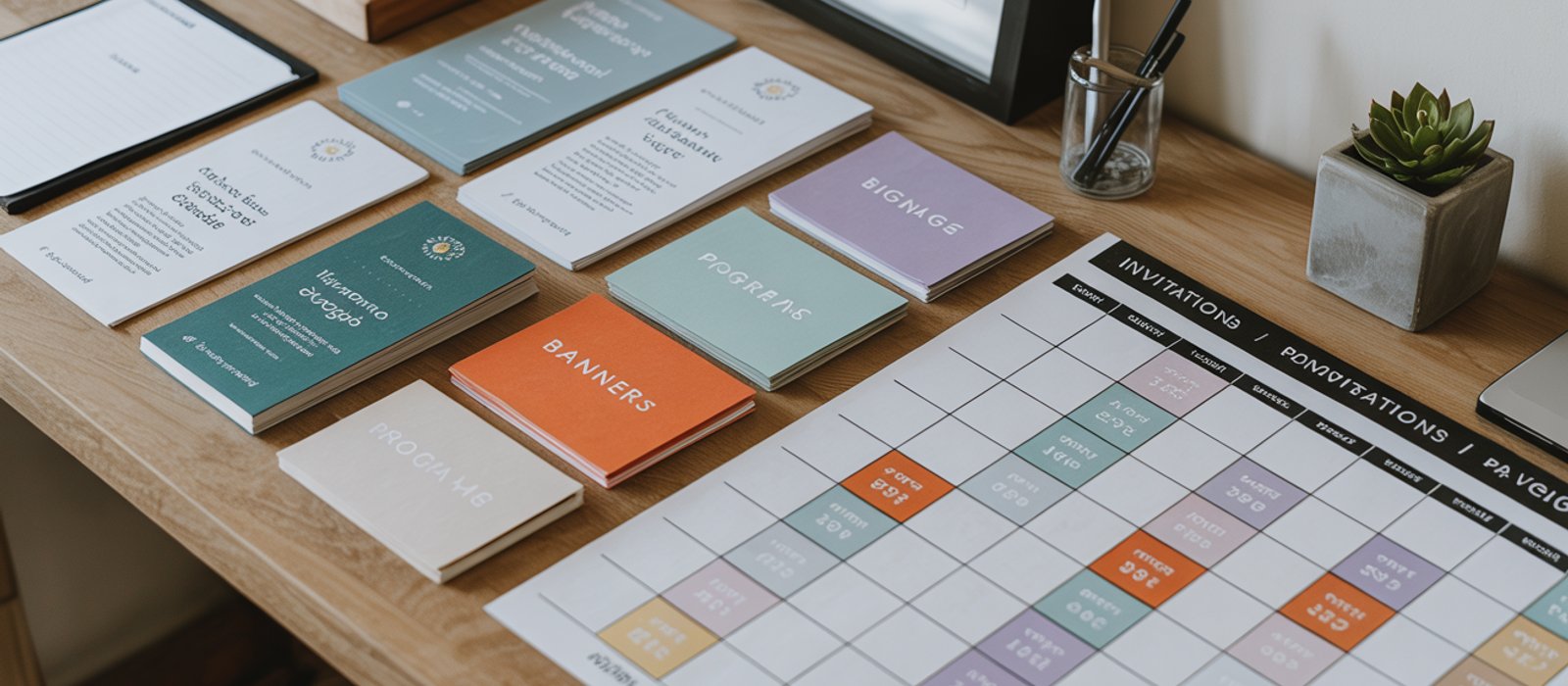
Picture this: It's three days before your big event, and you've just realised your pull-up banners are still at the printers, your programmes won't arrive until tomorrow, and those promotional flyers you ordered yesterday? They'll be ready "sometime next week."
Sound familiar? You're not alone. Nearly 60% of event organisers admit to experiencing print-related stress in the final weeks before their events. The culprit isn't poor planning skills—it's underestimating just how long quality print work actually takes.
Here's your complete event printing timeline to ensure your materials arrive on time, every time.
Start Early: 8-12 Weeks Before Your Event
Your event printing timeline should begin the moment you confirm your event date. This might seem excessive, but starting early gives you breathing room for revisions, reprints if needed, and bulk discount opportunities.
Week 12-10: Design and Content Planning
Begin with your core materials. These typically include:
- Save the date cards
- Main event brochures or programmes
- Large format displays (pull-up banners, backdrop banners)
- Promotional posters for advance marketing
Start gathering content, briefing designers, and establishing your visual identity. If you're working with external designers, factor in their timelines too. Many designers book weeks in advance, particularly during busy seasons.
Week 10-8: Design Approval and Print Quotes
With designs nearly finalised, start requesting print quotes. Don't just look at price—consider turnaround times, quality standards, and delivery options. A slightly more expensive printer with faster turnaround might save you stress later.
This is also when you should lock in quantities. It's often more cost-effective to print slightly more than you need rather than ordering additional print runs later.
Mid-Stage Planning: 6-8 Weeks Before
Week 8-6: Place Major Print Orders
Your main promotional materials should be ordered now. These include:
- Event programmes or brochures
- Large format signage and banners
- Tickets (if printing physical tickets)
- Branded merchandise for giveaways
Quality printers typically need 2-3 weeks for complex jobs, but popular periods (like conference season) can extend this. Ordering at 6-8 weeks out protects against delays and gives you time for corrections if something goes wrong.
Week 6: Proof Review and Final Approval
When proofs arrive, review them immediately. Check everything twice:
- Dates and times (surprisingly common errors)
- Spelling of speakers' names and company names
- Contact details and website addresses
- Image quality and placement
Don't rush this stage. A careful proof review now prevents expensive reprints later.
Final Sprint: 2-4 Weeks Before Your Event
Week 4-3: Last-Minute Materials
Some materials can only be finalised closer to the event date:
- Name badges and lanyards (once final attendee lists are confirmed)
- Table plans and seating charts
- Welcome signs with final sponsor logos
- Directional signage
These typically have shorter production times, but don't leave everything until the last minute. Even "quick" jobs can take 3-5 working days.
Week 3-2: Rush Job Safety Net
Reserve this period for genuine last-minute additions or corrections. If you've followed the timeline properly, you should only need minor additions like extra name badges or updated sponsor boards.
This is also when you should confirm delivery schedules with your printer. Arrange delivery to arrive 2-3 days before your event, not the morning of.
Managing Print Deadlines Like a Pro
Build Buffer Time Into Everything
Professional event organisers add 20-30% extra time to every print deadline. If your printer says two weeks, book three. This buffer accounts for unexpected delays, revision requests, and postal disruptions.
Establish Clear Approval Processes
Nothing delays printing like unclear approval chains. Before ordering anything, establish:
- Who has final sign-off authority
- Maximum revision rounds allowed
- Clear deadlines for feedback
Consider creating a simple approval matrix showing who needs to approve what materials. Share this with your printer so they know exactly who to contact for approvals.
Plan for Peak Periods
Certain times of year create bottlenecks at printers:
- September (conference season)
- Pre-Christmas (corporate events and parties)
- Spring (AGM season and summer events)
During these periods, add extra time to your timeline. Many experienced organisers book print slots months in advance during peak seasons.
Create Contingency Plans
Despite your best planning, things can go wrong. Prepare backup options:
- Identify local printers who can handle rush jobs
- Design materials that could work with digital alternatives (like tablet displays instead of printed signage)
- Keep emergency contact details for weekend and out-of-hours printing services
Quality vs Speed: Making Smart Choices
When print deadlines get tight, you'll face quality vs speed decisions. Here's how to prioritise:
Never Compromise On
- Materials guests will keep (programmes, certificates)
- Large displays that represent your brand
- Safety-critical signage
Acceptable Quick Alternatives
- Simple directional signs (can be produced in-house if needed)
- Internal team materials
- Backup signage
Remember that rushed printing often means higher costs. A job that costs £200 with normal timing might cost £350 as a rush order. Factor these potential costs into your budget from the start.
Your event's success shouldn't depend on whether your printer can work miracles in the final week. By starting your event printing timeline early, building in proper buffer time, and planning for contingencies, you'll transform print production from a source of stress into a smooth, predictable process.
The key is treating print deadlines with the same seriousness as venue bookings or speaker confirmations. Your future self—and your stress levels—will thank you for the early planning.